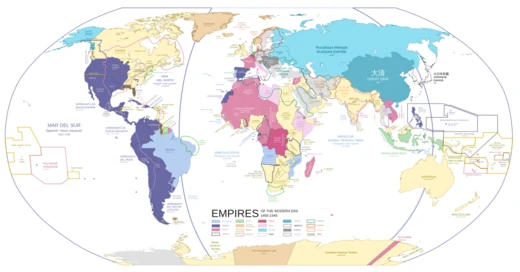
Ming dynasty
Last Han-led imperial dynasty of China, ruled 1368–1644.

The Ming dynasty, officially the Great Ming, was an imperial dynasty of China that ruled from 1368 to 1644, following the collapse of the Mongol-led Yuan dynasty. It was the last imperial dynasty of China ruled by the Han people, the majority ethnic group in China.
- Founded
- 1368
- Collapsed
- 1644
- Founder
- Hongwu Emperor
- Capital
- Beijing (primary), Nanjing
- Nationality
- Chinese (Han-led)
- Known for
- Last Han-ruled imperial dynasty; naval expeditions under Zheng He; construction of the Forbidden City
Lore & Background
The Hongwu Emperor attempted to create a society of self-sufficient rural communities, maintained a standing army exceeding one million troops, and built the world's largest navy dockyards in Nanjing. He also broke the power of court eunuchs and enfeoffed his many sons throughout China, issuing the Huang-Ming Zuxun to guide them. He employed eunuch supporters as a counterweight to Confucian scholar-bureaucrats, and one eunuch, Zheng He, led seven enormous voyages into the Indian Ocean as far as Arabia and eastern Africa. By the 16th century, European trade introduced crops like maize and potatoes, and a massive influx of South American silver re-monetized the economy. However, the Little Ice Age, crop failures, floods, and an epidemic, combined with a disruption in silver supply, led to the dynasty's collapse in 1644 when Li Zicheng's rebels entered Beijing.
Reader's Guide
The Ming dynasty is significant as the last imperial dynasty of China ruled by the Han people, marking a period of Han cultural restoration after Mongol rule. Its early emperors expanded into Inner Asia, built a massive standing army and navy, and undertook ambitious construction projects such as the Forbidden City and the restoration of the Grand Canal. The Ming also saw the voyages of Zheng He, which projected Chinese maritime power across the Indian Ocean. Economically, the dynasty experienced a shift from paper money to silver monetization driven by European trade, and the introduction of New World crops spurred population growth. However, internal administrative challenges, including tax evasion and reliance on forced labor, along with external pressures from Japanese piracy and later Manchu invasion, contributed to its decline. The Ming legacy includes its legal code, the Great Ming Code, and its influence on subsequent Chinese dynastic governance.
Did You Know?
- The Ming dynasty's standing army exceeded one million troops, and its navy dockyards in Nanjing were the largest in the world.
- Zheng He, a eunuch, led seven enormous voyages into the Indian Ocean as far as Arabia and the eastern coasts of Africa.
- The Ming dynasty collapsed in 1644 when Li Zicheng's rebel forces entered Beijing; Li then established the short-lived Shun dynasty.
From Kingdom to Empire: Europe's Shifting Gaze
When European voyagers first made direct contact with Ming China during their early 16th-century voyages, the prevailing assumption in European intellectual circles was that they had encountered a kingdom, not an empire. This initial misclassification reflected a framework in which only the most sprawling, multi-tiered political entities qualified as imperial. The shift away from that assumption did not happen overnight. It was Maximilianus Transylvanus who is credited with being the first to elevate China to imperial status in his writings. Yet even as these scholars made their cases, popular adoption lagged considerably behind. Only by the final decade of the Ming dynasty did an increasing number of Europeans consistently adopt the term 'Chinese Empire.'
Jesuit Bridges: Translating an Empire
The intellectual work of reclassifying Ming China as an empire was carried out largely by Jesuit missionaries and European scholars who sought to map Chinese political concepts onto familiar European categories. Figures such as Matteo Ricci, Álvaro Semedo, Martino Martini, and Philippe Couplet each contributed to constructing the name 'Chinese Empire' by drawing comparisons between European notions of empire and kingdom, translating Chinese political terminology, and building genealogies that linked the Ming court to a broader imperial tradition. Ricci, one of the founding figures of the Jesuit China missions, offered a particularly illuminating analogy: he argued that the name of the empire had remained unchanged since ancient times, even as different ruling families took power—much as the name 'German Empire' would persist regardless of whether the Austrian family or another house held the throne. This framework of 'imperial power transfer' allowed Europeans to see the Ming not as an isolated polity but as the latest chapter in a continuous imperial story stretching back millennia.
The Tribute System as Imperial Proof
Before the Ming dynasty, European knowledge of China was filtered through secondhand accounts, most famously Marco Polo's 13th-century travelogue, which referred to the land as Cathay. It took considerable effort for most Europeans to accept that Cathay and China were one and the same, let alone to grasp the political structure governing it. When direct contact finally came during the early 16th century, the question of how to classify Ming China's political order became urgent. In this arrangement, the emperor occupied the apex of a layered political order, a configuration that resonated with European understandings of imperial authority. This observation gave European intellectuals a concrete, observable mechanism through which to justify calling the Ming realm an empire rather than simply a large kingdom. The tribute system thus became, in the European mind, the empirical backbone of the 'Chinese Empire' concept.
One Empire, Many Dynasties: The Ming in a Continuous Narrative
Traditional Chinese historiography has long conceived of its political history as an unbroken sequence of dynasties, a framework that the Ming dynasty (1368–1644) occupied as one link in a chain stretching back to 221 BC, when China was first unified under a single emperor. Within this narrative, the Ming was not a standalone state but the latest expression of an empire whose identity predated any single ruling house. Juan González de Mendoza made this explicit in the late 16th century, stating in three separate places in his work that the mythical Yellow Emperor had elevated the Chinese kingdom to imperial status, meaning every dynasty since then—including the Ming—was simply a continuation of that original empire. Matteo Ricci reinforced this view through his concept of imperial power transfer, arguing that the empire's name endured even as the ruling family changed.
Frequently Asked Questions
Who is the Ming dynasty?
The Ming dynasty was a Han Chinese imperial regime that governed China from 1368 until its fall in 1644. It rose after the Mongol Yuan dynasty collapsed and stands as the final imperial dynasty led by the Han majority.
What are the Ming dynasty's key powers and achievements?
The Ming is celebrated for Zheng He's massive oceanic treasure fleets, the construction of the Forbidden City, and its role as the last Han-ruled imperial government in Chinese history. Its primary seat of power was Beijing, with Nanjing serving as a secondary capital.
Why is the Ming dynasty important?
It represents the last time the Han majority held the imperial throne, making it a defining chapter in Chinese political identity. Its cultural, military, and naval accomplishments set a benchmark that later dynasties measured themselves against.
Who founded the Ming dynasty?
The Hongwu Emperor, formerly a peasant rebel named Zhu Yuanzhang, established the dynasty in 1368 after defeating Yuan forces. He restructured the bureaucracy and reasserted Han cultural dominance across the empire.
More in Ancient Empires 25-37
Elsewhere in the Ancient Empires universe
Spotted an error? Know more?
This is a living reference — every entry is fact-audited, and reader corrections feed straight into our audit queue. Suggest an edit · See this site's audit record